
WELCOME BONUS 300%
UP TO €2000 + 100
FREE SPINS
UP TO €2000 + 100
FREE SPINS
Home → Games
All casino games at Safe Casino
37 vs. 38 Sectors: One Zero Difference
Roulette French carries an RTP of 97.30% and a house edge of 2.70%, figures that only hold because the wheel has 37 pockets rather than the 38 of the American version. The single zero is what separates the two formats: one extra pocket on the American wheel lifts the edge to roughly double the French level. A reader staking 100 € on the French layout therefore parts with 2.70 € on average, whereas the same 100 € on a double-zero wheel costs far more per round.
Inside bets on Roulette French are not rescued by the La Partage rule, which the game applies only to even-money wagers such as red or black. A straight bet on a single number still returns 35:1, a split 17:1, and a corner 8:1, so the 2.70% edge sits on every inside position without reduction. The player who backs one number for 10 € collects 350 € plus the stake when it lands, yet the long-run cost stays at 2.70% per 10 € staked.
The 37-pocket layout is the parameter worth remembering when the same stake is moved between wheels. Roulette French keeps 97.30% of turnover flowing back to players over hundreds of thousands of spins, an outcome that no single session reproduces. Anyone comparing French with American roulette is effectively comparing 2.70% against a materially larger edge, and the zero count is the whole reason for the gap.
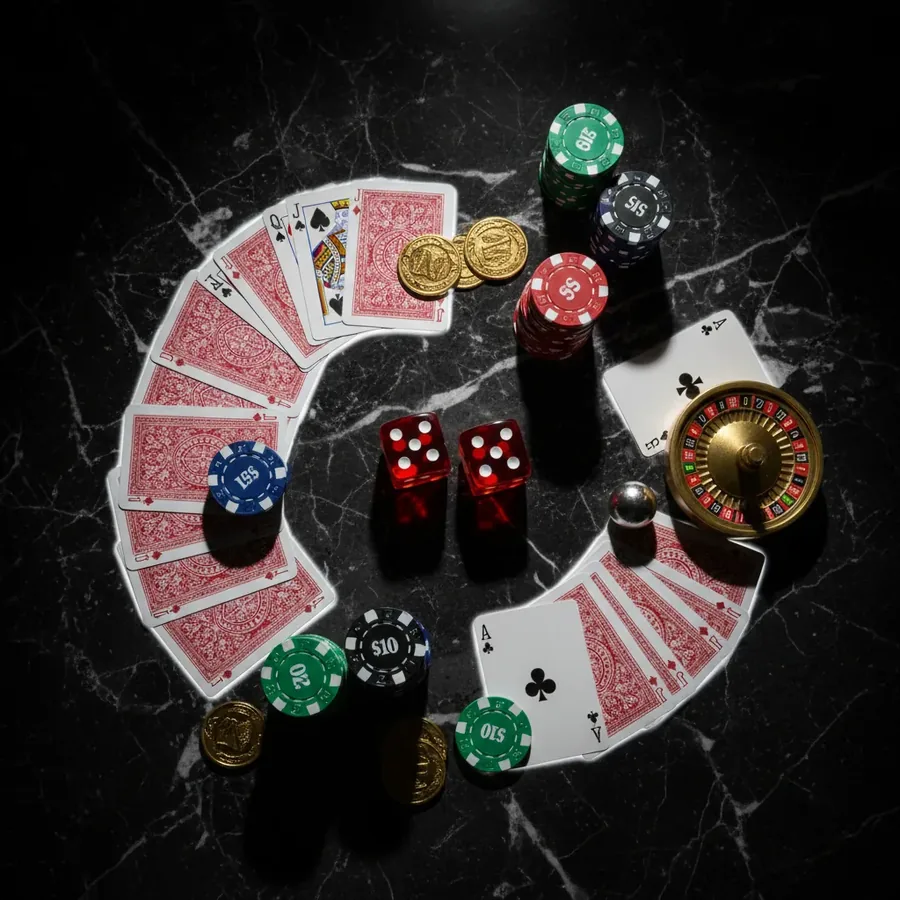
Straight-Up, Split and Corner Compared
A straight bet in Roulette French pays 35:1, a split returns 17:1, and a corner pays 8:1, three odds that look far apart but sit on the identical 2.70% house edge. The reason is coverage: one number against two numbers against four numbers. A 10 € straight returns 350 €, the same 10 € on a split returns 170 €, and on a corner it returns 80 €, so the payout shrinks as the covered area grows.
Dividing the payout by the number of covered pockets makes the three bets converge. The straight covers 1 of 37 pockets, the split 2 of 37, and the corner 4 of 37, and each combination of payout and coverage produces the same 97.30% RTP for Roulette French. A player who prefers frequent small returns can take the 8:1 corner, while the 35:1 straight delivers rarer but larger single hits, with neither choice changing the long-run cost.
The edge stays at the European level for all three positions because La Partage does not apply to inside bets. A street pays 11:1, a six line 5:1, a dozen 2:1, and a column 2:1, all under the same 2.70%. Comparing the 35:1 straight with the 2:1 dozen shows how differently the same 100 € of turnover is distributed across the session, while the average cost per 100 € staked remains 2.70 €.
35:1 Instead of 36:1: Where the House Edge Comes From
French roulette inside bets pay a straight number at 35:1, not the 36:1 that a fair 37-pocket wheel would require, and that single unit of shortfall is the whole house edge. The RTP stands at 97.30%, so the house edge is 2.70%. La Partage and En Prison do not cover inside bets, which leaves the edge at the European level rather than reducing it further.
On a 100 € straight-up bet, the average cost is 2.70 € per resolved wager, because the wheel holds 37 pockets while the payout is calculated on 36. Splits return 17:1, streets 11:1, corners 8:1, six lines 5:1, and dozens and columns 2:1, each set one unit below true odds. The gap between the 35:1 payout and the 36:1 fair return is exactly the 2.70% the casino keeps.
Craps offers a direct comparison: the Pass Line and Come bets carry an RTP of 98.59% and a house edge of 1.41% per resolved bet, or 0.42% per roll, with a standard deviation of 1.00. Baccarat on the Player hand (8 decks) returns 98.76% with a 1.24% edge and a standard deviation of 0.95. Both beat French roulette inside bets, where 100 € of stakes costs 2.70 € on average against 1.41 € on the Pass Line.
Corner Pays 8:1, Dozen Only 2:1
A corner bet in Roulette French pays 8:1 while a dozen or a column pays 2:1, a difference driven entirely by coverage. The corner covers 4 of 37 pockets, the dozen and the column cover 12 of 37 each. On a 10 € corner the return is 80 €, while the same 10 € on a dozen returns 20 €, so the larger payout accompanies the smaller chance of landing.
Both positions carry the identical 2.70% house edge and the same 97.30% RTP for Roulette French, so neither choice is cheaper in the long run. A player who wants a hit roughly every third spin can take the 2:1 dozen, while the 8:1 corner delivers a hit about once in nine spins. Twenty rounds at 10 € per round on either bet represent 200 € of turnover and an average cost of 5.40 €.
The comparison extends to the other inside positions under the same edge. A split pays 17:1, a street 11:1, a six line 5:1, and a straight 35:1, all of them sitting on the 2.70% figure because La Partage does not apply to inside bets. Moving 100 € between a corner and a dozen changes the rhythm of wins and losses but not the 2.70 € that 100 € of stakes costs on average.
A 2.70% House Edge: 2.70 EUR per 100 EUR
The house edge of 2.70% on Roulette French translates directly into 2.70 € per 100 € staked, a figure that applies to every inside bet on the 37-pocket wheel. A player who wagers 100 € across straight bets, splits, corners, streets, six lines, dozens or columns gives up 2.70 € on average, and 97.30 € flows back as part of the 97.30% RTP. The 300% welcome bonus up to €2,000 plus 100 free spins does not alter that underlying arithmetic on the layout.
Scaling the figure shows how the cost accumulates with volume rather than with the size of any single bet. One thousand euro of turnover on Roulette French carries an average cost of 27 €, ten thousand euro carries 270 €, and the 97.30% RTP holds across all of it. A 10 € straight bet returning 350 € plus the stake is a single outcome, whereas the 2.70% edge is the average that emerges over hundreds of thousands of spins.
The same 2.70% sits on every inside position because La Partage does not cover them, so the edge does not soften when a player switches from a 35:1 straight to an 8:1 corner or a 2:1 dozen. A bankroll of 1,000 € cycled once through the layout therefore costs 27 € on average, and the RTP of 97.30% describes that long-run return rather than any single session result.
Game categories at a glance
| Category | Examples | Stakes From | Highlight |
|---|---|---|---|
| Slots | Money Train 3, Jammin' Jars, Take Olympus | 0.10 EUR | thousands of titles |
| Table games | Roulette, Blackjack, Baccarat | 0.50 EUR | classic rules |
| Live casino | Mega Roulette, Quantum Blackjack Plus Live | 0.20 EUR | real dealers |
| Jackpot games | Mega Moolah, Divine Fortune, Age of the Gods | 0.20 EUR | progressive pools |
| Instant games | Aviator, Plinko, Mines | 0.10 EUR | fast rounds |
| Video poker | Jacks or Better, Deuces Wild | 0.25 EUR | strategy based |
Jacks or Better 9/6: 99.54% RTP
Video Poker Jacks or Better 9/6 (full pay) carries an RTP of 99.54% and a house edge of 0.46%, which means that on 100 € of stakes the average cost is 0.46 €, provided optimal strategy is played on every hand. The label 9/6 describes the pay table itself: a Full House returns 9 coins and a Flush returns 6 coins per single coin wagered. That puts the game level with Blackjack 6 decks, S17, DAS, DOA at 99.54% RTP, a rare tie at the top of the table game list.
The Royal Flush bonus of 4,000 coins only appears when the maximum bet of 5 coins is placed; at 1 coin the same hand pays 800. Without the maximum bet the return drops, so the 99.54% figure assumes five coins per hand. The rest of the pay table runs 50 for a Straight Flush, 25 for Four of a Kind, 9 for a Full House, 6 for a Flush, 4 for a Straight, 3 for Three of a Kind, 2 for Two Pair and 1 for Jacks or Better.
The 9/6 version sits above the short pay table 8/5, where a Full House pays 8 and a Flush pays 5 and the RTP falls to 97.29%, a loss of 2.25 percentage points. Intermediate versions land at 9/5 with 98.45%, 8/6 with 98.39%, 7/5 with 96.15% and 6/5 with 94.99%. Standard deviation on 9/6 is 4.42, so single sessions swing widely around the long-run average.
Splitting in Blackjack: One Hand Becomes Two
Doubling after a split is allowed in the Blackjack 6 decks, S17, DAS, DOA rule set, which reaches an RTP of 99.54% and a house edge of 0.46% when basic strategy governs every decision. Splitting turns one starting hand into two separate hands, each staked at the original amount, so a 10 € bet becomes 20 € on the table after a single split and 40 € after a second split where resplitting is permitted.
The same game pays a Blackjack at 3:2 and a regular win at 1:1, while insurance pays 2:1. Splitting is not free money: each new hand is a fresh wager, and the dealer still stands on soft 17, so the 0.46% edge is measured over all hands including split hands. Doubling on any first two cards applies before the split as well, which is what keeps the figure at 99.54%.
Splitting pairs such as aces or eights is a basic strategy decision, and basic strategy is required to reach the 99.54% figure at all. By contrast, the liberal Vegas Strip rule set, which adds resplit and late surrender, reaches 99.72% RTP and a 0.28% house edge. The difference between those two rule sets is 0.18 percentage points of RTP, and that gap is built from rules like the ones covering splits.
Before Doubling Down: Read the Dealer's Upcard
Doubling down on any first two cards is permitted in the Blackjack 6 decks, S17, DAS, DOA game, which posts an RTP of 99.54% and a house edge of 0.46% under basic strategy. The double down doubles the original stake in exchange for exactly one more card, so a 20 € bet becomes 40 € at risk on a single draw. The open dealer card is the only information that decides whether that extra card is worth buying.
Basic strategy requires the 99.54% figure to hold, and the double down decision is part of it: doubling on the wrong dealer upcard pushes the actual return below that level. The rule set also allows doubling after a split and no surrender, which together shape the 0.46% edge. Dealer stands on soft 17, so an ace showing does not turn into a strong dealer hand as often as it would under a hit-soft-17 rule.
Insurance is the opposite case. With six to eight decks the insurance side bet returns 92.53% RTP and carries a 7.47% house edge, and basic strategy always declines it. A single deck lowers that edge to roughly 5.88%, but the main bet is still the better use of the money. Doubling into a dealer ace without insurance keeps the focus on the 0.46% edge rather than the 7.47% one.
Dozen Bets at 2:1: Twelve Numbers, a Third of the Wheel
A dozen bet on Roulette French covers 12 of the 37 pockets and pays 2:1, and it counts as an inside bet where La Partage and En Prison do not apply, so the RTP stays at 97.30% and the house edge at 2.70%. A 10 € dozen bet returns 30 € on a win, which is the 10 € stake plus 20 € profit, and 100 € of such stakes cost 2.70 € on average over the long run.
The neighbouring inside bets carry the same 2.70% edge on the same 37-pocket wheel: a Straight pays 35:1, a Split 17:1, a Street 11:1, a Corner 8:1 and a Six Line 5:1. Columns also pay 2:1 and cover 12 numbers, mirroring the dozen bet. Because La Partage does not cover inside bets, the edge stays at the European level instead of dropping toward the French level on even-money wagers.
Coverage is 12 of 37 pockets, which is 32.43% of the wheel, so a dozen bet loses on 25 pockets in a single spin. At 2:1 the payout is short of the true 2.08:1 odds implied by 12 in 37, and that shortfall is exactly the 2.70% house edge. The same 2.70% applies whether the dozen is played once or a hundred times.
The Player Bet Pays 1:1 With No Commission
Baccarat Player carries an RTP of 98.76% across eight decks, paying a straight 1:1 with no commission deducted from the win. That 98.76% leaves a house edge of 1.24%, and the standard deviation of this bet sits at 0.95, so results cluster fairly tightly around the average. On €100 of Player stakes, the player gives up €1.24 on average, keeping €98.76 in theoretical return.
Set against Baccarat Banker, the Player bet looks slightly weaker: Banker returns 98.94% after its 5% commission, which is 0.18 percentage points more than Player. The gap is small, but it is real and it compounds over volume. A player staking €1,000 on Player rather than Banker forgoes roughly €1.80 of theoretical value across those bets, which is the price of avoiding the commission.
The Tie bet at 9:1 pays far more than Player at 1:1, yet its RTP is only 95.16%, a house edge of 4.84%. Anyone tempted by the bigger payout on Tie accepts an edge nearly four times the 1.24% on Player. For a player who wants no commission and no side bet, Player at 1:1 is the straightforward route, and the €1.24 per €100 is the cost of that simplicity.
Straight-Up Pays 35:1, Split Pays 17:1
French Roulette inside bets pay Plein 35:1 and Cheval 17:1, with the wheel holding 37 pockets and the RTP standing at 97.30%. That 97.30% translates into a house edge of 2.70%, the same as the European wheel, because La Partage does not apply to inside bets. On €100 staked across straight numbers, the average cost is €2.70, leaving €97.30 in theoretical return.
The payout ladder continues downward: Street pays 11:1, Corner 8:1, Six Line 5:1, while Dozen and Column each pay 2:1. Every one of these inside bets carries the same 2.70% edge, so the choice between them comes down to variance rather than value. A Six Line at 5:1 covers six numbers and produces more frequent, smaller wins than a Plein at 35:1 covering one.
Because La Partage is excluded from these inside bets, the player gains nothing from the French wheel's insurance feature on a straight number. The 2.70% edge applies exactly as it would on a European table, so €100 of Plein or Cheval stakes costs €2.70 in theory. Only outside bets on the French wheel can use La Partage, and the inside ladder stays at 35:1 down to 2:1 regardless.
House Edge and RTP: Two Sides of the Same Number
House edge is the average share of each stake that the casino keeps, and RTP is its mirror image: the two always add up to 100%. Baccarat Banker shows this plainly, with an RTP of 98.94% and a house edge of 1.06%, so €100 staked on Banker costs €1.06 on average and returns €98.94 in theory. The same arithmetic runs through every game on the floor.
Craps Pass Line carries a 1.41% house edge and an RTP of 98.59%, which is a smaller edge than Baccarat Player at 1.24%? No, larger: 1.41% against 1.24% means Pass Line is the slightly costlier bet of the two. Expressed per €100 staked, that is €1.41 lost on Pass Line versus €1.24 on Player. Come carries identical maths to Pass Line at 1.41%.
Blackjack Single deck, classic rules, 3:2 sits at an RTP of 99.85% and a house edge of 0.15%, the lowest edge of the main table games here. Craps Free Odds reaches 100.00% RTP on the odds portion with a 0.00% house edge, and the combined Pass plus 3-4-5x figure is 99.63%. On €100, that is a theoretical cost of just €0.15 on single-deck blackjack and nothing at all on the free odds bet.
Punto Banco: 5% Commission on Banker Wins
Baccarat Banker wins pay 0.95:1 because a 5% commission is deducted from the 1:1 payout, and that charge offsets the positional advantage the Banker gains when the third card is drawn. The resulting RTP is 98.94% with a house edge of 1.06%, and the standard deviation is 0.93. A €100 Banker win therefore returns €95 after commission, not €100.
Compared with Baccarat Player at 98.76% and a 1.24% edge, Banker is the better bet despite the commission: 98.94% against 98.76% is a 0.18 percentage point advantage. Even after the 5% deduction, Banker keeps more theoretical value for the player than the commission-free Player bet. The commission is the price of the better position, and it still leaves Banker ahead.
The Tie bet at 9:1 shows what happens when a side bet drifts far from the main game: its RTP is 95.16% with a 4.84% house edge, more than four times the 1.06% on Banker. Baccarat Player Pair and Banker Pair are worse still, at 89.64% RTP and a 10.36% edge. A player staying on Banker at 0.95:1 keeps the smallest edge in the game.
Full Pay Deuces Wild Reaches 100.76% RTP
Video Poker Deuces Wild — Full Pay, with the 25/15/9/5/3/2/2/1 pay table, reaches an RTP of 100.76% and a house edge of −0.76%, which is positive expected value for the player. All four deuces are wild, and the pay table runs from Natural Royal 800 down to Three of a Kind 1. On €100 of optimal play at the maximum bet, the theoretical return is €100.76.
That 100.76% only holds with flawless optimal strategy and the maximum bet. The smallest deviation from strategy pushes RTP below 100%, turning the positive edge negative. Compare Jacks or Better 9/6 at 99.54% RTP and a 0.46% edge, or the short-pay 8/5 version at 97.29% RTP and a 2.71% edge: the Deuces Wild Full Pay game is the only mainstream title above 100%.
The pay table itself shows where the value sits: Natural Royal 800, Four Deuces 200, Wild Royal 25, Five of a Kind 15, Straight Flush 9, Four of a Kind 5, Full House 3, Flush 2, Straight 2, Three of a Kind 1. The Royal Flush bonus of 4,000 on Jacks or Better requires the maximum bet of 5 coins, and the same maximum-bet condition governs the Deuces Wild return. A player staking less than the maximum cannot reach the 100.76% figure.
Contact
Live - online chat
Banking









Providers












Safe Casino 2026